How I Built a DIY Cedar Bird Feeding Station That Fits Into the Garden (And Attracts Woodpeckers)
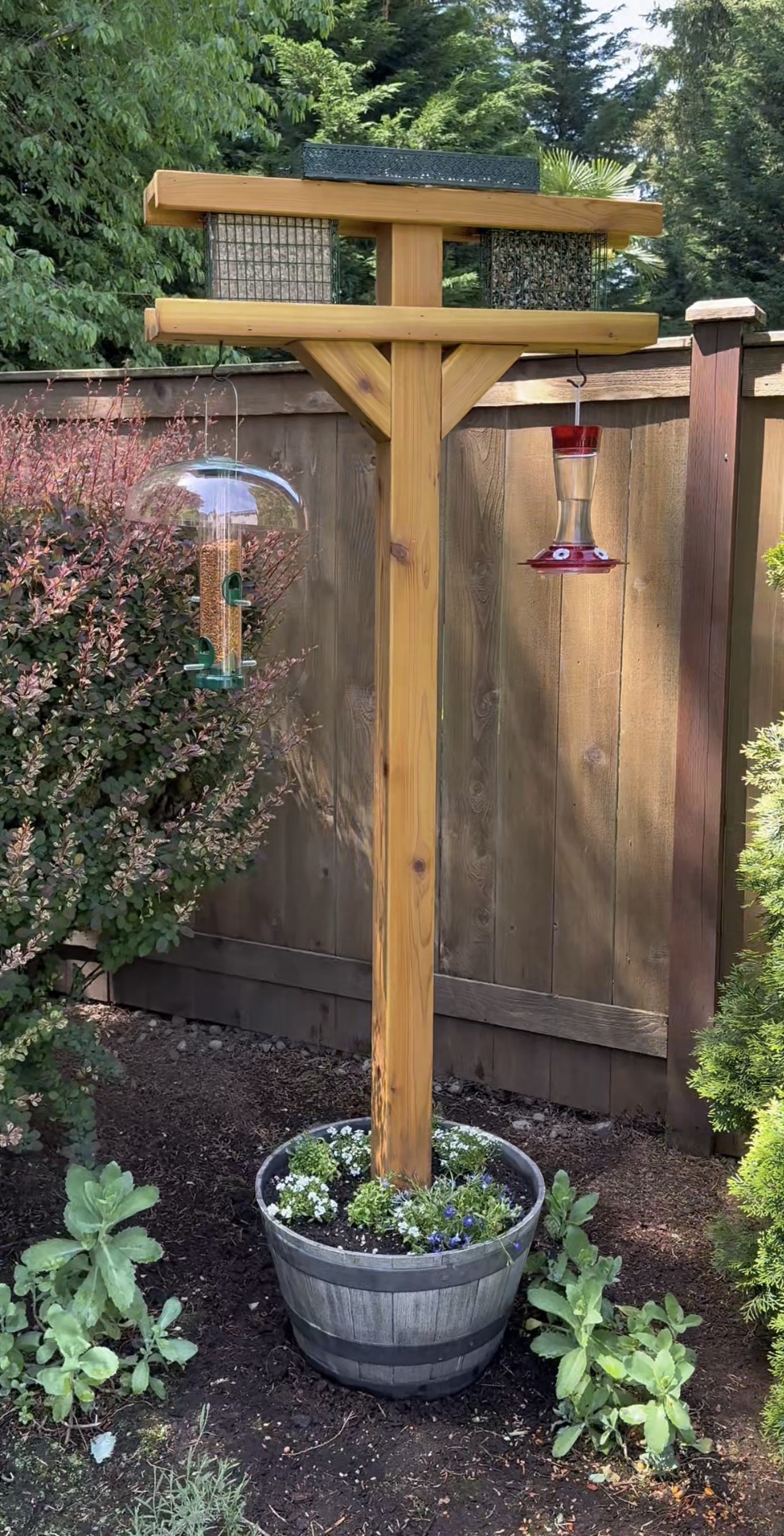
I did not want another thing in my backyard that looked like bird feeding equipment. You know what I mean: the standard pole with a hook, the plastic feeder that fades by August, the setup that works fine but looks like an afterthought. My backyard is a space I actually care about, and whatever I added to it needed to belong there. This DIY cedar bird feeding station is the result of wanting something that actually fit into the garden.
So when I decided to build a dedicated bird feeding station, I had three goals beyond just feeding birds: it needed to fit into the existing landscape, it needed to be something I could move if the layout changed, and it needed to be decorative in its own right. I also really wanted to attract larger birds and woodpeckers, which most standard feeders are not designed for.
What I ended up with checked every box. And it brought in woodpeckers within the first week.
Designing Around the Garden, Not Around the Feeder
The key decision early on was the base. I did not want to set a post in the ground permanently, and I did not want to bolt anything to the fence or the house. I wanted the station to be freestanding and moveable.
A whiskey barrel planter turned out to be the perfect solution. The cedar post sets in concrete inside the barrel, which makes the whole station surprisingly solid and completely freestanding. But the real bonus is what you can do with the barrel itself. I planted flowers around the base, varieties that attract hummingbirds and butterflies, and the barrel became part of the garden rather than something sitting in front of it. The flowers draw in the hummingbirds from below while the feeders bring in the birds from above. The whole thing works together.
If you ever want to move it, you move the barrel. No holes in the fence, no permanent footprint.
The Cedar Bird Feeding Station Design
The station itself is built around a cedar post with a two-level crossbeam structure at the top. Cedar was the natural choice. It weathers beautifully without paint or stain, holds up through Pacific Northwest winters, and looks right at home in a garden setting.
The upper crossbeam holds two large suet cages side by side. I specifically went with large suet cages because standard small cages are awkward for bigger birds. A Northern Flicker needs room to maneuver, and the large cage format lets them grip and feed comfortably. I stock them with large suet cakes and refill every few days when the birds are active.
From the side arms I hung a 6-port tube feeder on one side for seed and a hummingbird feeder on the other. The locking hanger hooks I used screw directly into the cedar and lock so the feeders stay put in the wind. The hummingbird feeder with ready-to-use nectar paired with the flowers in the barrel below has been a consistent draw all season.
One optional addition worth considering: a squirrel baffle mounted on the post below the crossbeam. If squirrels are a problem in your yard, this wrap-around baffle designed for 4x4 posts will stop them from climbing up and raiding the suet and seed. I recommend it if you know your neighborhood has persistent squirrels.
Want to build this yourself? The full step-by-step PDF plan is on Etsy with the cut list, materials list, and photos throughout.
Get the Build Plan on Etsy →The Build
All the cedar components were cut with my SKIL 10" sliding compound miter saw: crosscuts on the post and crossbeams, with a few angle cuts for the arm braces. I used exterior tan wood screws throughout and Titebond III waterproof glue on all the key joints. Pre-drilling every pilot hole in cedar is non-negotiable. Skip that step and you will split a board.
Setting the post in the barrel is its own step that requires some patience. Getting it perfectly plumb before the concrete sets makes a big difference in how the finished station looks and how the feeders hang. A good combination square and a level are your best friends here.
What It Brought In
Within a few days the tube feeder had chickadees and goldfinches. The suet brought in nuthatches almost immediately. Cardinals started showing up on the crossbeam itself, which I had not expected. They seemed to like having a wide flat surface to land on rather than a perch.
Then the woodpeckers found the suet.
A Northern Flicker landed on one of the large suet cages and worked it for a solid few minutes. I grabbed my camera and got video, the kind of footage I had been hoping for since I set this thing up. That clip ended up on my photography page, and it would not have happened without a stable, well-positioned station that kept the bird comfortable long enough to actually film. Came back the next morning too. That was the moment I knew the station was doing exactly what I had hoped. Larger birds need the right food and enough space to feel comfortable. The large suet cages and the freestanding post give them both.
The hummingbird feeder has been equally active, especially with the flowers in the barrel below drawing them in from the garden level first.
Why This Build Works
There are plenty of bird feeders you can buy. This one works because it was designed to fit into a real backyard. Not just to feed birds, but to look like it belongs, to move when you want it to move, and to be part of the garden rather than something dropped into it.
The whiskey barrel base with flowers is the detail that makes people stop and ask about it. The large suet cages are the detail that brings in birds most feeders miss entirely. And being able to pick up the whole thing and move it is the detail that makes it practical for a real backyard, not just a showpiece.
If that sounds like what you want in your backyard, the full PDF build plan is on Etsy with the cut list, materials list, and step-by-step instructions with photos throughout.
Get the Build Plan on Etsy →What You'll Need
Feeders and accessories:
- Large Suet Cakes
- Large Suet Cages
- 6-Port Tube Feeder, Green
- Hummingbird Feeder
- Hummingbird Nectar
- Locking Hanger Hooks
- Whiskey Barrel Planter
- Squirrel Baffle for 4x4 Posts (optional)
Hardware and tools:
Affiliate Disclosure: Some links on this page are Amazon affiliate links. If you purchase through them I may earn a small commission at no extra cost to you. I only recommend products I have used on my own builds. — Paul Marcoe, Marcoe Woodworks